


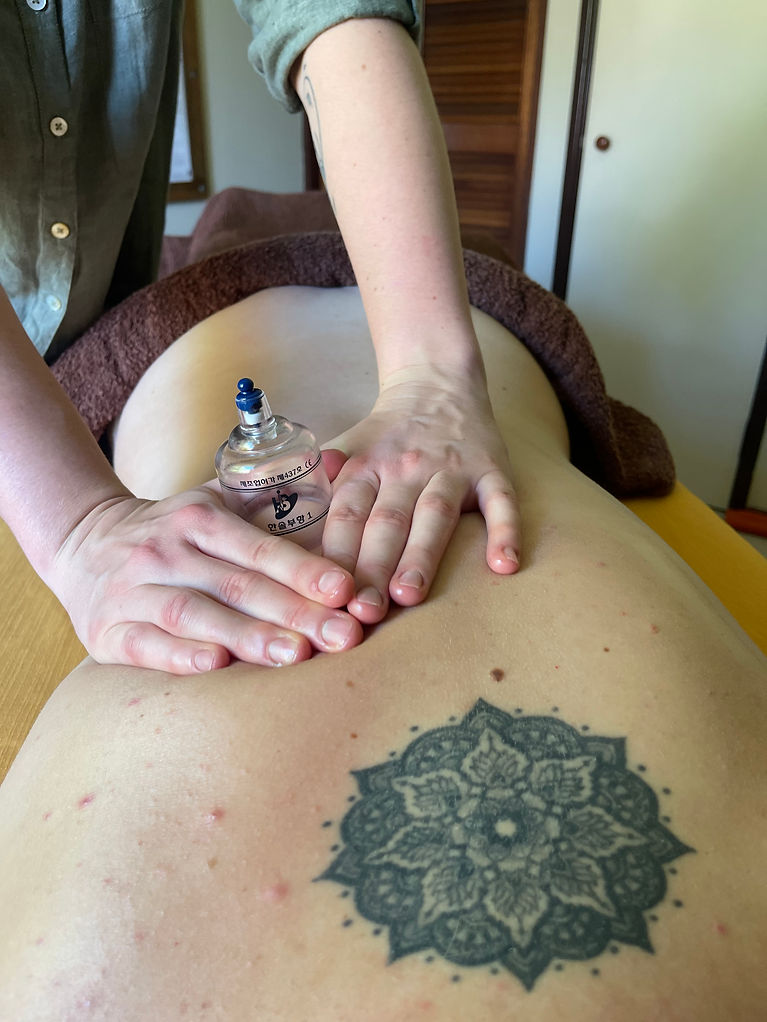
Myofascial Cupping
(Bodywork)
What Myofascial Cupping Is
Myofascial Cupping is a gentle, modern cupping technique designed to lift, stretch, and decompress the fascia — the connective tissue that surrounds and interweaves with every muscle, nerve, organ, and vessel in the body. Unlike traditional cupping, which often uses strong suction and can leave marks, Myofascial Cupping uses light, comfortable negative pressure and smooth gliding movements to create a soothing, non‑painful experience.
This technique may also include gentle joint mobilisations, enhancing the stretch already created by the cups and encouraging greater freedom through the surrounding tissues.
How Myofascial Cupping Works
By lifting and separating the layers of fascia, Myofascial Cupping creates a passive stretch that increases circulation, encourages tissue hydration, and supports the delivery of oxygen and nutrients to the area. This helps soften adhesions, reduce restrictions, and restore mobility — especially in areas affected by injury, repetitive movement, or long periods of inactivity.
Myofascial Cupping is also highly effective for addressing trigger points — tight, tender knots within the muscles that can cause local or referred pain. The decompressive action of the cups helps release these points without the discomfort sometimes associated with deep pressure techniques.
By improving fascial glide and hydration, Myofascial Cupping not only supports recovery but also helps prevent future soft‑tissue injuries, making it a valuable tool for both rehabilitation and ongoing wellbeing.
Benefits of Myofascial Cupping
-
Gently lifts and decompresses fascia
-
Softens adhesions and restrictions
-
Improves circulation and tissue hydration
-
Reduces muscular tension and trigger points
-
Enhances flexibility and range of motion
-
Supports recovery from injury or repetitive strain
-
Helps prevent soft‑tissue injuries
-
Promotes relaxation and nervous system ease
-
Encourages healthier movement patterns
Myofascial Cupping May Be Helpful For…
-
Chronic tightness or stiffness
-
Restricted movement or reduced flexibility
-
Trigger points or “knots”
-
Postural strain (desk work, manual labour, long hours standing)
-
Repetitive strain or overuse injuries
-
Localised discomfort or tension
-
Fascial adhesions from inactivity or injury
-
Athletes or active individuals seeking improved mobility
-
Anyone who prefers gentle, non‑painful techniques
You can experience this modality within both our Remedial Massage and Integrative Healing sessions.